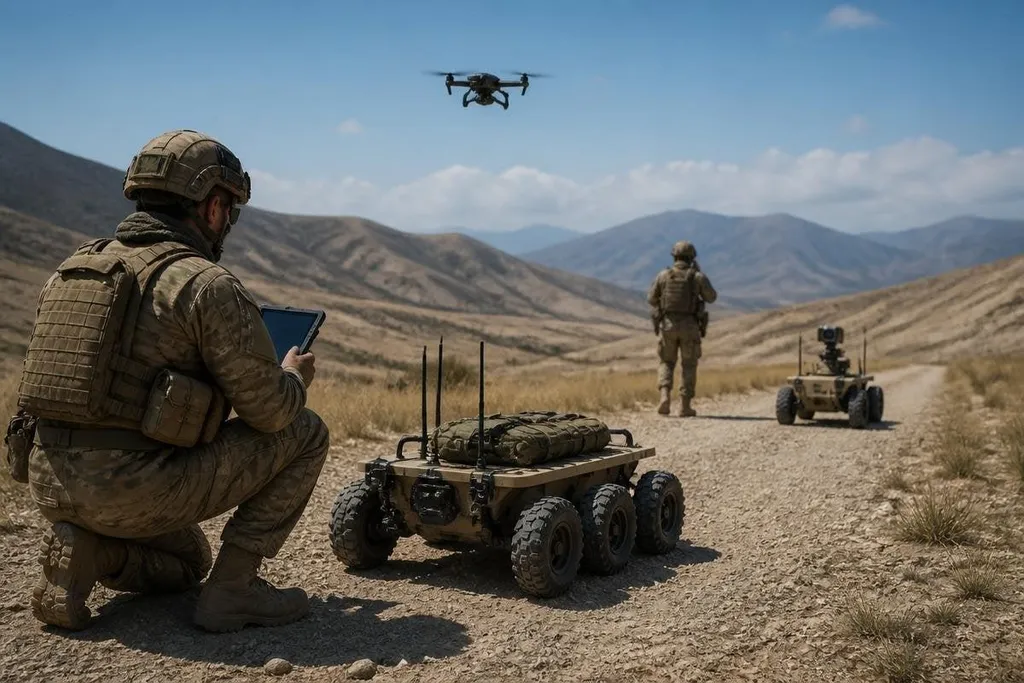
Military robots are moving defense planning away from single platforms and toward teams of human operators, sensors, vehicles, and software. The main shift is practical: commanders can place machines in dangerous areas, collect information, and move supplies without putting a person in the same position.
- Robots can keep people away from mines, fire, and contaminated areas.
- Autonomous systems can watch terrain and send data to human teams.
- The hardest problems are trust, control, repair, and rules of use.
From machines to mixed teams
A military robot rarely replaces a full unit. It usually handles one task inside a larger group. An uncrewed ground vehicle may carry equipment, inspect a route, or move a wounded person. An aerial system may watch a road while people make the decision about what happens next.
That changes planning. A commander must now ask how many machines are available, how they share data, who controls them, and what happens when a link fails. The robot matters because it changes the work around it.
This approach also changes risk. A remote vehicle can enter an area that may contain explosives or chemical hazards. The person operating it may still face danger, but the robot creates distance between the operator and the first inspection.
Data becomes part of the force
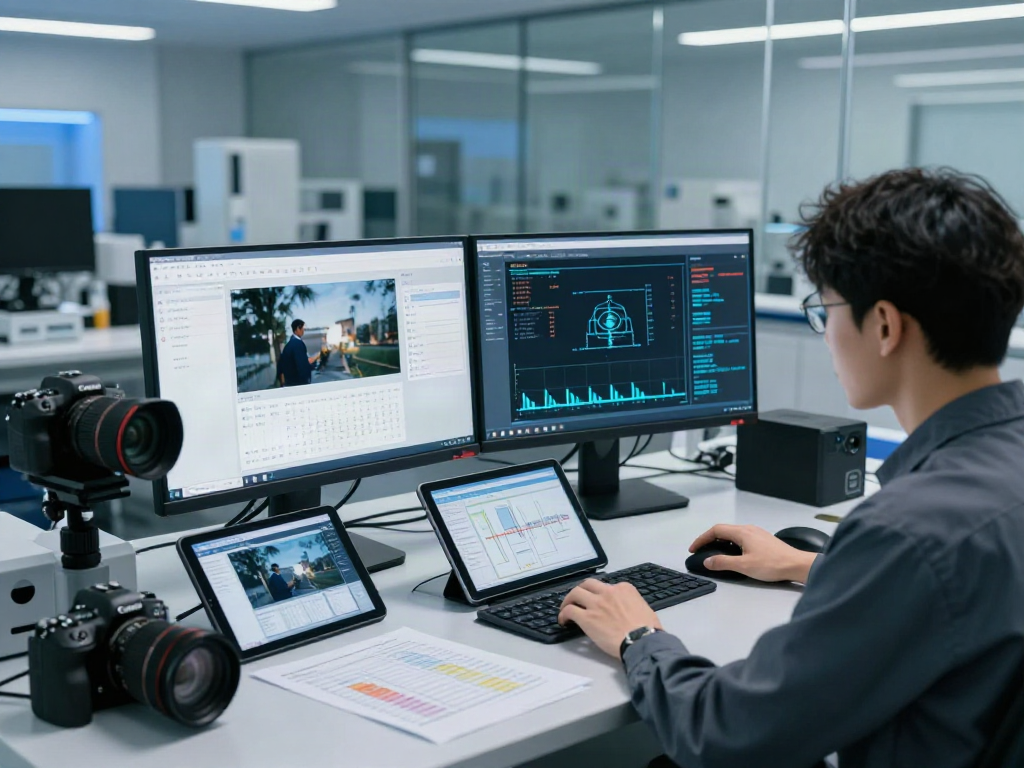
Sensors turn robots into moving sources of information. Cameras, thermal sensors, radar, and LiDAR can show obstacles, people, vehicles, or changes in terrain. LiDAR measures distance with laser pulses, helping a robot build a map of its surroundings.
The value of that data depends on the wider system. A sensor reading must reach the right team, appear in a usable form, and arrive soon enough to support a decision.
A damaged network can leave a reconnaissance robot with data that no commander sees. Communications links, cyber defenses, and command software decide whether that reading reaches a person who can act on it. Robot24.com's defense robotics reporting can add dated examples of those handoffs before the discussion turns to autonomy and the chain of command.
Autonomy changes the chain of command
Remote control keeps a person involved, but it can also limit range and speed. Autonomous software lets a robot follow a route, avoid obstacles, return to a safe point, or continue a search after a short loss of contact.
That does not remove the need for human control. It changes the level at which people supervise the machine. A person may approve the task, set boundaries, and review the result while the robot handles movement inside those limits.
The hard question is authority. A system that can identify a target, select a route, or choose when to stop needs clear rules and reliable safeguards. Training must cover software faults as well as the normal field problems of weather, dust, blocked signals, and damaged hardware.
The limits are strategic too
Robots need batteries, spare parts, trained operators, secure networks, and time for repair. An army that buys machines without planning those needs may gain equipment without gaining a usable force.
Autonomy also has limits. A model trained on one type of terrain may behave poorly on another. A camera can mistake a harmless object for a threat. A radio link can fail. Human teams must know when to pause the system and take control.
I’d judge a military robot by the full task it supports, not by a short demonstration. The useful question is whether the machine still helps after transport, setup, signal loss, repair, and bad weather enter the plan.
A practical test for defense planners
Before adding a robot to a unit, check these points:
- Name the task: State the job in plain terms, such as route inspection, supply movement, or surveillance.
- Set the control rule: Record what the robot may do alone and what needs human approval.
- Test the link: Measure how the system behaves when contact weakens or stops.
- Plan the support: List batteries, spare parts, software updates, and repair staff.
- Set the exit: Define when the team will recover, replace, or shut down the robot.
These checks turn a robot from a purchase into part of an operating plan. They also show where a cheaper sensor, better radio, or trained human team may solve the same problem.
Military robots are changing defense strategy because they alter distance, information, and control at the same time. The next useful measure is not how many systems an army owns, but how many complete tasks those systems can perform when the network, weather, and hardware all stop cooperating.